
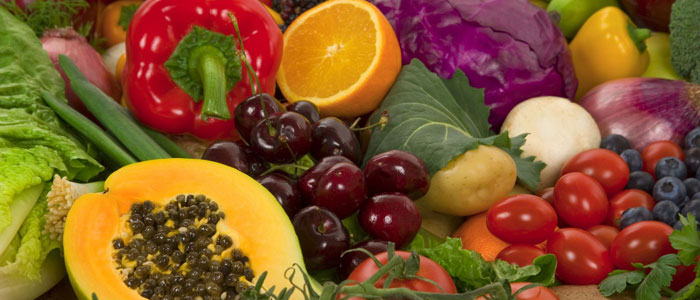
Nutritional properties of vegetables and greens
Fresh vegetables and greens are foods that help hydrate our body due to their high water content, in addition to being nutritious.
Nutritional properties of vegetables Copy Cwp April 8, 2018 No Comments Fresh vegetables are foods that help hydrate our body due to their high water content. In addition to being nutritious and healthy. They are rich in vitamins, minerals, fiber and, to a lesser extent, starch and sugars. Fact that explains its low caloric intake. They are also an undisputed source of substances with antioxidant action. For all these reasons, they are considered fundamental for health and essential within the concept of a balanced diet. Whose most representative model is the Mediterranean diet. The Mediterranean diet, based mainly on the consumption of vegetables, contributes to reducing the risk of diseases with maximum impact in countries with a high level of well-being. Among them cardiovascular, degenerative and cancer. However, despite the fact that our country has a privileged productive potential and despite the increase in consumption experienced in recent years of fresh vegetables and current knowledge that demonstrates the beneficial role of diet in health, there is evidence that these foods are not consumed in sufficient quantities. According to 2003 data from MAPA (Ministry of Agriculture, Fisheries and Food), the consumption of fresh vegetables during that year was 66.6 Kilograms per capita. This represents 5% of the total expenditure on food. Compared to the previous year, an increase of 3.7% was observed, despite the strong increase in price. Specifically, 6.4%. If we take the different geographical areas of our country as a reference, the highest consumption of fresh vegetables is in Catalonia, Aragon and Valencia. On the contrary, Cantabria, Extremadura and Galicia are the three communities where the least c onsumen. Another notable fact is that which refers to organically grown vegetables. In 2003 they represented 11% of the total consumption of fresh vegetables. Daily recommendations The recommendations for the consumption of fresh vegetables are between three and five servings a day, that is; a minimum of 400 grams daily. Along with fruits, they are the main dietary sources of vitamin C and provitamin A. Many are also excellent sources of other nutrients, fiber and antioxidants, and have a low protein and fat content. To cover the recommendations, although it may seem like a difficult goal to achieve, it would be enough to consume vegetables in the first course and accompanying the seconds. Both at lunch and dinner. It would be advisable for at least one serving to be salad because this is the way in which all its nutrients are best preserved. To understand it better, it would be enough to make an approach similar to the one set out below. Spinach (200 grams) with chickpeas and loin with peppers (50 grams) in the meal. And, at dinner, a mashed potato and vegetable (150 grams) and fish accompanied by a tomato salad (120 grams). All of this leads to highlighting the importance of continuing to launch campaigns to promote greater consumption of fresh vegetables. These should be extended to the general population and health professionals. As well as the media. Its success will make it easier to incorporate these essential foods into the diet for good health in sufficient quantities. Benefits of vegetables and greens They provide very few calories: This is due to their low protein, fat and carbohydrate content and their high water content. The caloric intake range is between 16-32 Kcal/100g. High amount of water Low carbohydrate content, which is of interest in planning dietary treatments such as diabetes, obesity… High fiber content: The consumption of vegetables is vital to achieve the daily fiber recommendations. Important source of vitamins: Mainly those of group B, and especially folic acid in leafy vegetables, vitamin C and B-Carotenes in those with an intense color. They contain many minerals: Calcium and iron stand out, although their chemical form and interference with other oxalates do not make them especially bioavailable. Due to the chlorophyll that vegetables have, most of them are rich in Magnesium. It is also worth highlighting its richness in potassium and its low sodium content, a factor to take into account in patients with hypertension. Organic acid content: the most abundant are citric acid (tomato), malic acid and oxalic acid (noted in spinach). These acids, being in the form of salts, have a low acidic PH. Factor that makes their conservation difficult and implies that they have to undergo heat treatments to prevent the development of bacteria such as Clostridium botulinum. Some vegetables contain aromatic phenolic acids, responsible for the browning they suffer when cut. Carotenoids: pigments belonging to the carotenoid group are fat-soluble and have colors ranging from yellow to red. The relationship between carotenoids (B-carotene) and vitamin A is interesting, since they are precursors of this vitamin. In food processing, carotenoids have fairly good resistance to heat and pH changes. But they are very sensitive susceptible to oxidation where a lot of color is lost and vitamin A activity is destroyed. Flavonoids: anthocyanins stand out. They are phenolic acids, hence their antioxidant function. Cyanidin, responsible for the color of red cabbage, is the majority component of this group.