3 tips to eliminate emotional eating
Emotional eating is that hunger that is guided by your emotions. Here we leave you tips to eliminate it and lose weight
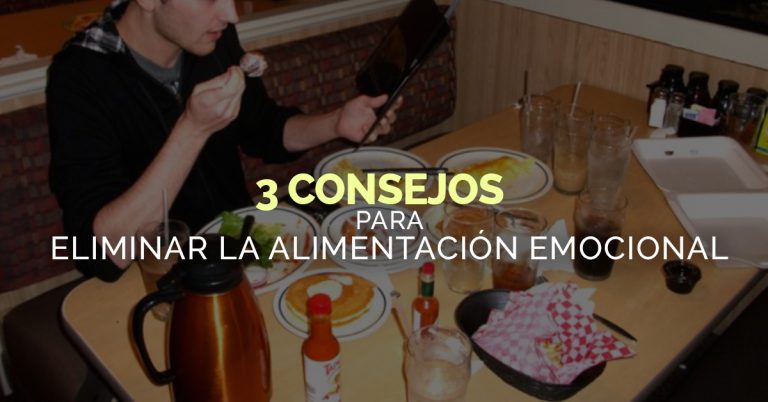
Here are three tips to help you eliminate emotional eating from dietitian Eve Lahijani so you can lose weight.** This post is part of Lahijani’s “How to Be a Better Human Being” series, each of which contains a useful tip. Imagine if eating were as simple as, say, learning to drive a car. On the other hand, for many of us, eating is not easy at all. What begins as a biological need quickly becomes entangled with different emotions, ideas, memories and rituals. Food takes on all kinds of meanings such as comfort, punishment, appeasement, celebration, obligation. And depending on the day and our mood, we can end up overeating, undereating, or eating recklessly.** It’s time for us to reconsider our relationship with food, says Eve Lahijani, a Los Angeles-based dietitian and nutritional health educator at UCLA. **
1. Reconnect with your hunger.
So many things lead us to eat, it’s noon and that means lunch time. It’s midnight and that means snack time, we are happy, we are anxious, we prefer not to bring home leftovers. We’re too polite to say no, we’re bored, and oh wow, did someone bring donuts?!** Similarly, we suppress our appetite for some reasons. We’re too busy, we’re sad, we’re anxious, no one else pays attention, it’s too soon, it’s too late.** * Now try doing this: Eat only when you are hungry; stop when you are full. “It may seem obvious to you,” Lahijani admits. Still, think about the past week: How many times did you eat when you weren’t hungry?** She suggests we think about our hunger and fullness on a scale of 0-10. With 0-1 being hungry and 9-10 being painfully full (like Christmas dinner). ** She says: “You want to start eating when you’re first hungry, and that correlates with a three or four on the scale and [stop]…. when you feel comfortably full, a six or seven on the scale.”** The reason you shouldn’t wait until you’re hungry (or, 0-2 on the scale) is because that’s when people tend to make nutritionally poor decisions. ** If you’ve ever gone to the supermarket when you were hungry, you probably didn’t fill your cart with products. You went straight for the high calorie items. Lahijani says, “It is also wise to eat when you are first hungry because you are more likely to enjoy the food[y]. You are more likely to eat carefully…. “When we let ourselves get carried away by hunger, chances are you are eating too fast and not paying attention.” ** In fact, one of the biggest predictors of overeating is giving in to hunger in the first place.”**
2. Emotional eating fills your body with calories.
When Lahijani was a victim of emotional eating, she did two things: she was either on a diet or overeating. ** As she says, “Whenever I was on a diet, the diet told me what to eat.” While I was on an eating plan, I ate what was convenient for me or went out to eat whatever was prohibited. ** Developing a different relationship with food meant breaking out of those patterns. ** “Instead of listening to other people’s opinions about what I should eat, I stayed silent and listened to my own body,” she says. “I fed my body whatever it wanted.”** * It turns out that Lahijani wasn’t craving junk food back then. “I was actually trying things for the first time, because my mind wasn’t filled with judgment and guilt.** I actually found that my body was craving nutritious foods like vegetables and fruits. I actually liked my sister’s kale and quinoa salad.”**
**3.-Try not to use food as a reward or punishment.
It is not surprising that we do this. After all, as children, we quickly learn that joy and festivities come with cake. While punishments result in…. there is no cake. ** But one of the great things about being an adult is that we can make our own associations.** Of course, let’s continue celebrating our birthdays with cake.** * Or, celebrate in ways that have nothing to do with food. Now you can set your own rules.** When Lahijani’s feelings about food diminished, she was surprised** “What’s really interesting is seeing how to make peace with food that affected other areas of my life. As I learned to listen to myself, I listened better to others, I became more empathetic,” she says. ** “As I worked to trust myself, I became more trusting in my relationships and more vulnerable, and as I became more loving with myself… I learned what it means to love another person.” I give you a super delicious and healthy recipe book so you can start your change today! Download it for FREE HERE **